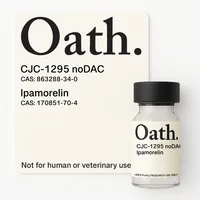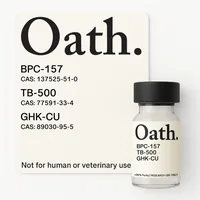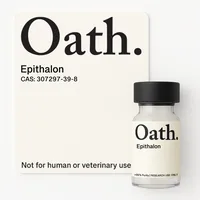

Certificate Reference
For continuity with the current catalog, this page links to laboratory documentation for a component or a closely related product. The linked certificate is a reference only and is not represented as the batch-specific COA for Retatrutide.
Overview
Retatrutide is a single peptide engineered to activate three metabolic hormone receptors: GIP, GLP-1, and glucagon receptors. That triple-agonist profile makes it a particularly useful research tool for studying how incretin signaling and glucagon biology interact to regulate glucose control, appetite, energy intake, and body-weight physiology.
Research Reference: View compound profile on NIH PubChem
Research Focus
WHAT THIS FORMULA FEATURES
The distinctive feature is simultaneous engagement of three receptor systems rather than the single GLP-1 pathway alone. Human phase 2 and phase 3 studies have reported dose-dependent changes in HbA1c and body weight, while the glucagon component adds a mechanistic question around energy expenditure and substrate metabolism.
EXPECTED RESEARCH READOUTS
Typical research endpoints include cAMP signaling at GIPR/GLP1R/GCGR, insulin and glucagon responses, glucose excursion and HbA1c-related measures, food intake, body-weight and fat-mass change in appropriate models, energy expenditure, lipid markers, and receptor-specific pathway dissection.
Research endpoints described above reflect published or model-based scientific observations and are not guaranteed outcomes. This product is strictly for research purposes only. Not approved for human or animal use.
Key Characteristics
MOLECULAR PROFILE
CAS: 2381089-83-2
Classification: Investigational multi-receptor peptide agonist
PHYSICAL PROPERTIES
Form: Lyophilized powder
Catalog strengths: 5 mg | 10 mg | 15 mg | 20 mg | 30 mg | 40 mg | 50 mg | 60 mg
Purity specification: ≥99% catalog specification; verify current batch COA
Storage: Store at −20°C (−4°F) for long-term storage or 4°C (39°F) for short-term storage; avoid repeated freeze-thaw cycles.
Testing: Batch documentation should be verified against the current lot before analytical use.